A CDT test is a blood test used to detect patterns
of heavy alcohol consumption.
It is often used in DVLA medicals, workplace testing,
and situations where alcohol misuse is a concern.
What Is a CDT Test?
CDT stands for Carbohydrate-Deficient Transferrin.
It is a blood marker linked to regular heavy alcohol use.
Transferrin is a protein naturally found in the body.
When someone drinks heavily and regularly,
CDT levels may rise.
Alcohol itself may only be detectable in blood for a short period.
CDT can give a longer-term picture of drinking patterns.
How Much Alcohol Raises CDT Levels?
Regular heavy drinking can raise CDT levels over time.
The uploaded content describes this as typically around
50–80 grams of alcohol per day over two to three weeks.
In the UK, one unit of alcohol is 8 grams of alcohol.
This means 50–80 grams is roughly 6–10 units.
Binge drinking may also affect CDT levels.
The impact depends on how much is consumed
and how often those episodes happen.
Practical Example
One isolated binge every two weeks may be less likely
to raise CDT than frequent heavy drinking.
Repeated heavy episodes are more concerning.
CDT Test Procedure
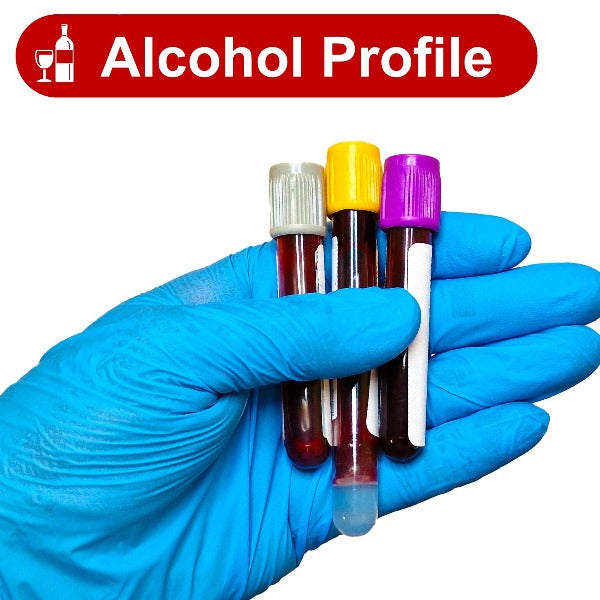
A CDT test is usually done using a blood sample.
The sample is sent to a laboratory for analysis.
No special preparation is usually required before the test.
However, alcohol intake before testing can affect the result.
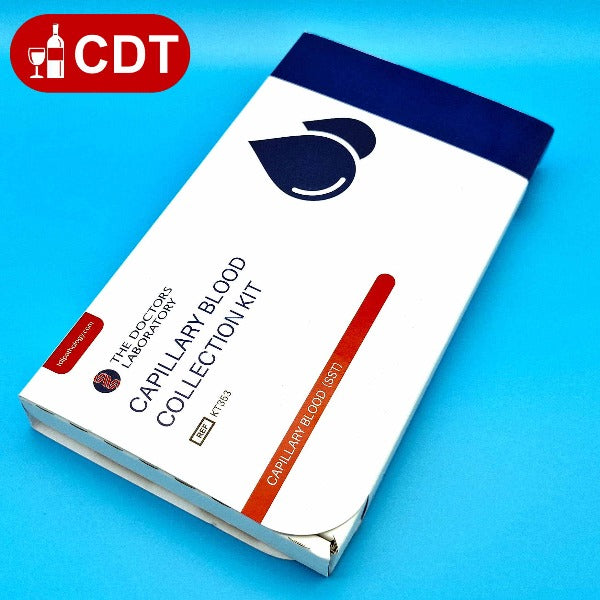
A home CDT test may use a finger-prick blood sample.
This is collected in a small container and posted to the laboratory.
CDT results are usually reported as a percentage.
The result must be interpreted in context.
Normal Range
CDT levels below around 1.7%
are typically considered normal.
People abstaining from alcohol often have levels around 1%.
Elevated CDT
CDT levels above 1.7% may suggest prolonged heavy alcohol intake.
For DVLA purposes, levels above 2.2% may cause concern.
Returning to Normal
After stopping heavy drinking, CDT levels can fall.
They may return to normal within around two to four weeks.
Trying to Cheat the Test
CDT testing is difficult to manipulate.
The best way to lower CDT is total alcohol abstinence.
CDT Test Limitations
CDT testing is useful, but it is not perfect.
It is mainly designed to detect ongoing heavy alcohol consumption.
Occasional drinking:
CDT may be less useful for occasional or sporadic drinking.
Medical conditions:
liver, kidney, or pancreatic disease may affect interpretation.
Medication effects:
some medicines may influence alcohol-related markers.
Genetic factors:
some people may naturally have different CDT patterns.
Always provide a full medical and medication history
when arranging alcohol-related testing.
The DVLA and CDT Testing
The DVLA may use CDT testing when assessing fitness to drive.
This is especially relevant after drink-driving concerns
or alcohol-related licence issues.
CDT levels above 2.2% may lead to further medical investigation.
This is because high CDT levels can suggest chronic alcohol consumption.
If someone fails a DVLA CDT test,
they may face restrictions, retesting, or further assessment.
Before reapplying, it is sensible to abstain from alcohol
and ensure CDT levels have returned to the acceptable range.
CDT Testing in Other Settings
CDT testing is not only used by the DVLA.
It may also be used in occupational and safety-critical settings.
Military settings:
CDT testing may help assess fitness and readiness.
Workplace testing:
some safety-sensitive roles may require alcohol testing.
Medical assessments:
CDT can help assess possible heavy alcohol use.
Getting a CDT Test
Drug Test London offers CDT testing options
for people who need alcohol-related blood testing.
CDT Test in London
You can have a CDT test in person
at our London Patient Reception.