Alcohol units help you understand how much alcohol is in your drink. They make it easier to compare wine, beer, cider, and spirits.
This guide explains UK alcohol units, common drink examples, weekly limits, drink-driving rules, and how to calculate units.
What Is an Alcohol Unit?
In the UK, 1 alcohol unit equals 10ml or 8g of pure alcohol.
Alcohol units are useful because drinks vary in size and strength. A glass of wine, pint of beer, and spirit measure can all contain different amounts of alcohol.
The UK Alcohol Unit Formula
Units = volume in ml × ABV (%) ÷ 1000
For example, 175ml of wine at 13% ABV: 175 × 13 ÷ 1000 = 2.3 units.
Alcohol Units in Common Drinks
The image below shows approximate alcohol units in common UK drink sizes. These figures depend on the drink size and ABV.
Image source note: units are approximate and depend on drink size and strength. UK alcohol units are calculated as volume in ml × ABV ÷ 1000.
125ml wine at 13% ABV: about 1.6 units.
175ml wine at 13% ABV: about 2.3 units.
250ml wine at 13% ABV: about 3.3 units.
750ml wine bottle at 13% ABV: about 9.8 units.
Pint of beer or cider at 4.5% ABV: about 2.6 units.
500ml can of beer or cider at 5% ABV: about 2.5 units.
25ml spirit at 40% ABV: 1 unit.
35ml spirit at 40% ABV: 1.4 units.
Always check the label. Stronger drinks and larger measures contain more units.
Weekly Alcohol Guidelines
UK guidance recommends drinking no more than 14 units of alcohol per week.
It is best to spread these units across three days or more. This avoids concentrating alcohol into one heavy drinking session.
Fourteen units is roughly equivalent to:
around 6 medium glasses of wine, or
around 6 pints of lower-strength beer.
There is no completely safe level of regular drinking. Staying within the guideline reduces health risk.
Alcohol and Driving
There is no safe number of units that guarantees you can drive. Alcohol affects people differently.
Your blood alcohol level can depend on:
your weight, age, sex, and metabolism
the type and strength of alcohol
how quickly you drink
whether you have eaten
your stress levels and general health
The safest advice is simple: do not drink any alcohol if you plan to drive.
UK Drink-Drive Limits
The legal drink-drive limit differs across the UK. Scotland has a lower limit than England, Wales, and Northern Ireland.
England, Wales and Northern Ireland
35 micrograms of alcohol per 100ml of breath
80 milligrams of alcohol per 100ml of blood
107 milligrams of alcohol per 100ml of urine
Scotland
22 micrograms of alcohol per 100ml of breath
50 milligrams of alcohol per 100ml of blood
67 milligrams of alcohol per 100ml of urine
How to Calculate Alcohol Units
Use this formula:
Volume in ml × ABV (%) ÷ 1000
For example, a 568ml pint at 4.5% ABV contains:
568 × 4.5 ÷ 1000 = 2.6 units
Online calculators can make this easier, especially if you drink different products and measures.
Alcohol can affect many areas of health. This includes sleep, mood, blood pressure, weight, liver health, and long-term disease risk.
The more alcohol you drink, the greater the risk. Cutting down can improve energy, sleep, mood, and overall wellbeing.
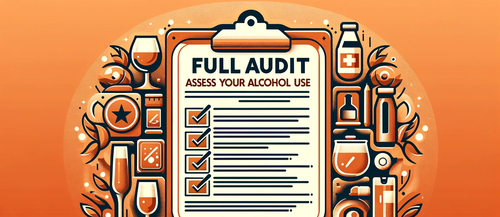
Concerned About Alcohol Intake?
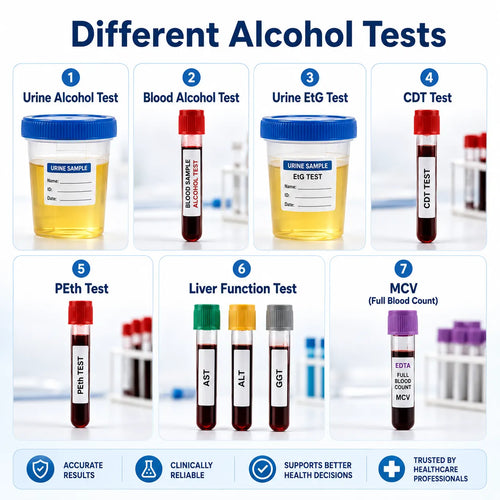
Alcohol testing can help answer different questions. Some tests check recent drinking. Others assess longer-term alcohol use or health effects.
Drug Test London offers alcohol testing options, including urine alcohol, blood alcohol, EtG, CDT, PEth, liver function testing, and full blood count testing.